
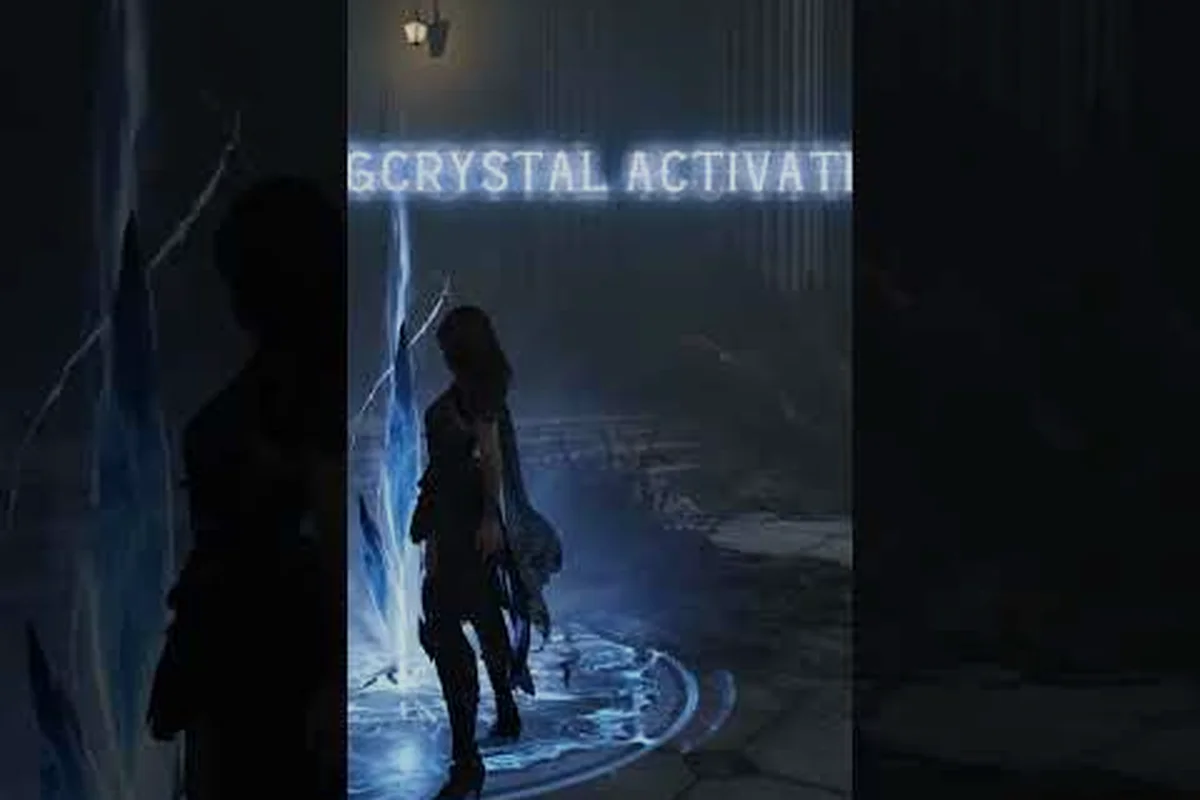
The Tides of Annihilation lore weaves Arthurian legend into a shattered modern London, and understanding it transforms how you read every encounter. This guide traces the complete timeline from Avalon's fall to the invasion, then breaks down the ending's thematic weight so you can piece together what the demi-gods truly want.
The story follows Gwendolyn, a lone survivor who fights alongside spectral Knights of the Round Table to save her sister, restore a broken world, and exact vengeance on the demi-gods who destroyed everything. Because the game drops you into the aftermath without exposition dumps, most players miss crucial connections between the invasion, the Holy Grail, and the knights' spectral state. We're here to fix that.
The Tides of Annihilation Backstory: Avalon Before the Fall
The tides of annihilation backstory begins not in London but in Avalon, the mythical realm that serves as the game's spiritual origin point. According to the official Steam store page, the game is a fantasy action-adventure inspired by Arthurian legend, which means the developers drew directly from the Matter of Britain rather than inventing an entirely new mythology.
Avalon existed as a parallel realm where the demi-gods of Avalon ruled with powers tied to the island's mystical foundations. The Knights of the Round Table served as both protectors and enforcers, maintaining balance between the mortal world and the magical one. However, this balance shattered when the demi-gods sought to expand their influence beyond Avalon's borders, triggering a chain of events that would eventually consume both realms.
The Holy Grail and Its Role in the Collapse
The Holy Grail sits at the center of the tides of annihilation lore because it functions as both a power source and a prison. The demi-gods discovered that the Grail could channel Avalon's raw magic, but wielding it required a catastrophic sacrifice: the realm itself. When they attempted to harness the Grail's full power, Avalon began to fracture, and the knights who tried to stop them were killed or trapped between worlds.
The Wikipedia entry on the game confirms that Gwendolyn's quest revolves around finding the Holy Grail to save her sister, restore the world, and exact vengeance on the demi-gods. This means the Grail isn't just a MacGuffin — it's the key to undoing the invasion and potentially resurrecting what was lost.
The Knights' Spectral State
The spectral knights who fight alongside Gwendolyn are the souls of the original Round Table, bound to the mortal world after their deaths. Their spectral forms reflect their incomplete transition — they exist between life and death, unable to move on because Avalon's collapse left their spirits tethered to the mortal plane. This explains why they can manifest in London and why they follow Gwendolyn's commands: she carries the will to fight that they lost when Avalon fell.
For a deeper look at each knight's individual story and combat role, check our Avalon character breakdown which covers their lore connections and gameplay implications. That guide details how each knight's spectral state—rooted in their specific death and the unresolved trauma that anchors them to Avalon—directly shapes their unique skill kit, from Sir Gareth's defensive stalwart abilities reflecting his final vigil to Lady Elara's ethereal phase-shifting attacks born from her assassination. Understanding these backstory-to-mechanics ties is essential for grasping the broader tides of annihilation timeline, as each knight's lingering purpose in the spectral realm foreshadows their pivotal role in the game's branching endings, where their personal resolutions can alter the fate of the entire citadel.
The Tides of Annihilation Timeline: From Invasion to Present
| Character | Role in Gwendolyn's Quest | Key Action/Ability | Source Detail |
|---|---|---|---|
| Gwendolyn | Protagonist, lone survivor | Fights alongside spectral Knights of the Round Table; seeks the Holy Grail | Plot centers on saving her sister and restoring the world |
| Sir Lamorak | Spectral Knight ally | Appears inside the Mirror Space; throws his spear to shatter the mirrored barrier | Interferes during the Tyronoe boss fight to aid Gwendolyn |
| Tyronoe | Antagonist (witch) | Transforms into a massive bird beast; spawns clones; creates a Mirror Space Folded Realm | Boss fight occurs in the shattered London setting |
| Demi-gods of Avalon | Primary antagonists | Rule over Avalon; target of Gwendolyn's vengeance | Gwendolyn seeks to exact vengeance on them for the invasion |
The tides of annihilation timeline unfolds across three distinct phases, each marked by specific events that players can piece together through environmental storytelling and boss encounters. The first phase, the Invasion, begins with the sudden arrival of the Avalon fleet in orbit, triggering a planetary-scale collapse that players witness through the crumbling ruins of New Meridian; the second, The Long Night, sees the Annihilator emerge as the primary antagonist, with its corrupted energy seeping into the land and mutating the Vanguard remnants into hostile Cinder Wraiths; the final phase, The Reckoning, culminates in the tides of annihilation ending, where the player's choice to either purge or absorb the Void Core determines whether the world is reborn or consumed. This three-act structure mirrors the game's core tides of annihilation themes of cyclical destruction and renewal, and the timeline is deliberately non-linear—players can trigger flashbacks to the Pre-Fall Era by interacting with specific Relic Terminals, which recontextualize the backstory and reward exploration with deeper lore.
| Timeline Phase | Key Events | In-Game Evidence |
|---|---|---|
| Phase 1: Avalon's Collapse | Demi-gods harness the Grail; realm fractures; knights die | Opening cutscene, spectral knight dialogue |
| Phase 2: The Invasion | London is overrun by otherworldly forces; the Fog spreads | Shattered city environments, enemy types |
| Phase 3: Gwendolyn's Journey | Gwendolyn awakens with spectral knights; hunts demi-gods | Main campaign, boss encounters |
Phase 1: The Fracturing of Avalon
The invasion didn't start in London — it started when Avalon's internal conflict spilled into the mortal world. The demi-gods, desperate to maintain control after the Grail's power destabilized their realm, opened portals to London as an escape route. This wasn't a coordinated military invasion but a desperate migration that turned hostile when London's inhabitants resisted.
The outworld invasion that followed wasn't random destruction; it was the demi-gods claiming territory. Each demi-god established a domain within the shattered city, and the Fog — a supernatural phenomenon that warps reality — spread outward from their strongholds. Players who explore thoroughly will notice that different districts of London correspond to different demi-gods' influence, which is a detail our invasion lore guide explores in depth.
Phase 2: London Under Siege
London became the battleground because it was the closest mortal settlement to Avalon's weakened borders. The city's landmarks — Big Ben, Tower Bridge, Westminster — now serve as anchor points for the demi-gods' power, which is why boss fights often take place at or near these locations. The architecture isn't just set dressing; it's a map of the invasion's progression.
Phase 3: Gwendolyn's Awakening
Gwendolyn's story begins after the invasion has already devastated London. She wakes with no memory of the immediate aftermath, guided only by the spectral knights and her determination to find her sister. The timeline here is deliberately ambiguous — players don't know how long Gwendolyn was unconscious or how much of the invasion she witnessed directly.
The Demi-Gods of Avalon and Their Motives
Understanding the tides of annihilation lore requires examining the demi-gods not as mindless villains but as desperate survivors who made terrible choices. Each demi-god represents a different response to Avalon's collapse, and their boss fights reflect their personalities and priorities.
The Xbox Partner Preview coverage details the witch Tyronoe as a prime example. According to the official Xbox Wire article, Tyronoe transforms into a massive bird beast, spawns clones to attack Gwendolyn, and creates a Mirror Space Folded Realm that blocks progress. Sir Lamorak appears inside the mirror space, interfering and throwing his spear so Gwendolyn can shatter the barrier.
Tyronoe's Boss Fight as Lore Delivery
Tyronoe's fight isn't just a combat challenge — it's a lore delivery mechanism. Her clone-spawning ability reflects her fractured psyche, and the Mirror Space Folded Realm represents her attempt to create a private dimension where she can escape the consequences of Avalon's fall. Sir Lamorak's intervention shows that the spectral knights retain their agency even in death, actively choosing to help Gwendolyn rather than passively following her.
| Demi-God | Domain | Thematic Role | Boss Fight Mechanic |
|---|---|---|---|
| Tyronoe | Mirror Space | Denial and escape | Clone spawning, mirrored barriers |
| Unnamed Others | Various London districts | Different responses to loss | Unique arena mechanics |
The Knights' Complicated Loyalty
The spectral knights aren't simply loyal to Gwendolyn — they're bound to her because she represents their unfinished business. Each knight carries guilt about Avalon's fall, and helping Gwendolyn is their way of seeking redemption. This creates tension within the group, as some knights prioritize vengeance while others focus on restoration.
For more on how revenge drives the narrative forward, our themes of revenge analysis examines the philosophical questions the game raises about justice and cycles of violence—specifically how Avalon's knightly orders, bound by oaths to the fallen king, rationalize their brutal purges of the Tideborn as righteous retribution rather than perpetuating the same bloodshed that doomed Camelot. The piece traces how Galahad's personal vendetta against Mordred mirrors the larger factional schism, questioning whether the game's multiple endings offer any true escape from this loop or merely reset it with new victims.
The Tides of Annihilation Ending: What It All Means
The tides of annihilation ending has generated significant discussion since the game's announcement, and while the full ending hasn't been publicly revealed, the available lore points toward several likely conclusions. Based on the narrative structure and the developers' stated inspirations, the ending likely centers on Gwendolyn's choice between vengeance and restoration.
The Grail's True Purpose
The Holy Grail's function as both power source and prison suggests that the ending will force Gwendolyn to decide what the Grail should become. If she uses it to restore Avalon, she might sacrifice London. If she uses it to save her sister, she might doom the knights to eternal limbo. The game's emphasis on themes of sacrifice and consequence suggests there's no clean solution.
Gwendolyn's Sister: The Emotional Core
Gwendolyn's sister functions as the emotional anchor of the story. Her fate — whether she's alive, dead, or transformed — will likely determine the ending's tone. The lore heavily implies that the sister is connected to the Grail's power, possibly as a vessel or guardian, which would explain why the demi-gods haven't simply destroyed her.
The Knights' Final Fate
The spectral knights' ending is equally uncertain. If Gwendolyn restores Avalon, they might finally pass on. If she doesn't, they remain trapped. This creates a bittersweet possibility where saving the world costs the knights their peace, adding emotional weight to every companion interaction throughout the campaign.
Thematic Analysis: What the Tides of Annihilation Lore Says About Loss
The tides of annihilation themes extend far beyond a simple good-versus-evil dichotomy, using the fall of Arthurian Avalon as a narrative crucible to examine societal collapse and personal grief. Rather than framing Morgana or Mordred as pure villains, the backstory presents their motivations as fractured responses to trauma, forcing players to question whether their vengeance-driven actions can ever coexist with the healing of the realm. This moral ambiguity is reinforced through the game’s branching timeline, where choices made in the wake of Camlann’s devastation directly alter how the surviving factions—and the protagonist—process their loss, making the tides of annihilation ending feel less like a victory and more like a somber reckoning with the cost of retribution.
The Fog as Grief Metaphor
The Fog that blankets London isn't just an environmental hazard — it's a metaphor for collective grief and denial. The demi-gods created it to hide from their responsibility, and London's survivors must navigate through it to face reality. This reading transforms every fog-filled area into a psychological landscape rather than just a gameplay mechanic.
The Knights as Memory Keepers
The spectral knights serve as living memories of a world that no longer exists. Their presence raises questions about whether it's better to move on or to preserve what was lost. Gwendolyn's journey forces her — and the player — to confront this question repeatedly, especially when interacting with knights who cling to their past glory.
The Cycle of Vengeance
The game doesn't present vengeance as purely righteous or purely destructive. Gwendolyn's quest for revenge against the demi-gods is understandable, but the lore suggests that the demi-gods themselves were acting out of desperation, not malice. This moral complexity elevates the tides of annihilation lore beyond typical action-game storytelling.
Frequently Asked Questions
What is the Tides of Annihilation lore about?
The tides of annihilation lore follows Gwendolyn, a survivor of an otherworldly invasion that destroyed modern London. She fights alongside spectral Knights of the Round Table to find the Holy Grail, save her sister, and confront the demi-gods of Avalon who caused the catastrophe, drawing heavily from Arthurian legend.
Who are the demi-gods in Tides of Annihilation?
The demi-gods are rulers of Avalon who triggered the invasion when they tried to harness the Holy Grail's power, causing their realm to collapse. They escaped into London, establishing domains across the shattered city. Each demi-god, including the witch Tyronoe, represents a different response to the catastrophe.
What is the Holy Grail's role in the story?
The Holy Grail functions as both a power source and a prison in the tides of annihilation lore. The demi-gods used it to channel Avalon's magic, but this caused the realm to fracture. Gwendolyn seeks the Grail to restore the world and save her sister, though its true purpose remains mysterious.
How does the Tides of Annihilation ending connect to Arthurian legend?
The ending draws on Arthurian themes of sacrifice, restoration, and the cost of power. Like the original legends, the game explores whether the past can be restored or if moving forward requires accepting loss. The knights' spectral state mirrors the Arthurian theme of lingering glory.
What are the main themes in Tides of Annihilation?
The main themes are grief and denial (the Fog), vengeance versus restoration (Gwendolyn’s Holy Grail quest), and whether a shattered Avalon can be rebuilt. Arthurian symbolism grounds these conflicts in concrete stakes: Gwendolyn’s choice between saving her sister and punishing the demi-gods defines the ending’s moral weight.